
Clear, simple information about bruxism
What bruxism is, what can contribute to it, its signs, how it is assessed and how it can be managed — based on scientific sources.
Written by: Specialist Dentist Dilara Boylu — Oral and Maxillofacial Surgeon
Last updated: 29 October 2026
Contents
Understanding Bruxism: What Are Teeth Clenching and Grinding?
Bruxism is the term used for clenching or grinding your teeth, or tightening your jaw muscles even when your teeth are not touching. It can also involve pushing your jaw forward or to the side. These activities may happen on their own or together, while you are asleep or awake.
You may not realise you are doing this. Bruxism can be silent and does not always cause symptoms.
Teeth clenching means pressing your teeth tightly together. You may repeatedly clench and release them, or hold them together for a while.
Teeth grinding means moving your lower jaw so that your teeth rub against each other. Grinding can make a sound, but bruxism can also happen without any noise.
There are two forms of bruxism:
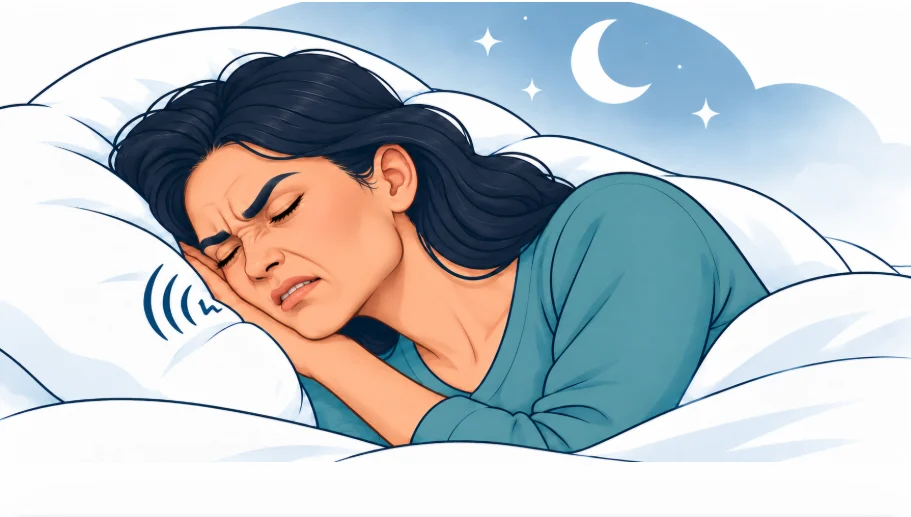
Sleep bruxism happens while you are asleep. The muscles you use for chewing may tighten and relax in a repeating pattern or work irregularly. This may involve clenching or grinding your teeth.
Awake bruxism happens while you are awake. You may repeatedly bring your teeth together, keep them pressed together, or hold your jaw muscles tense without your teeth touching. Clenching and jaw tension are more common than grinding.
Bruxism is not always a health problem, and not everyone needs treatment. Whether it needs attention depends on your symptoms, the findings of a dental examination, and its effects on your teeth, jaw muscles and nearby tissues.
What Can Contribute to Bruxism?
Bruxism does not have a single cause. Several factors may play a part, including how the brain and nervous system control the jaw muscles, changes during sleep, emotional stress and daily habits. Their role can differ from person to person.
Stress and emotions
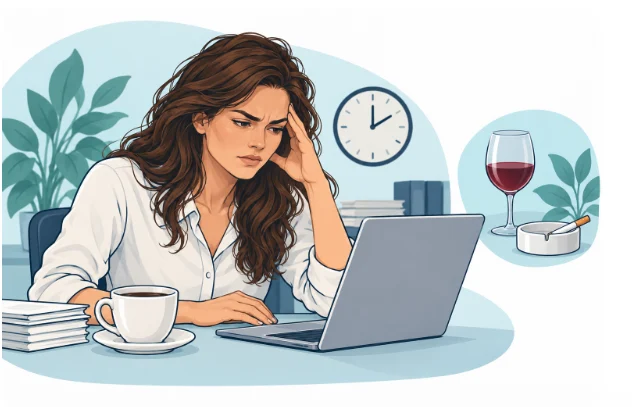
Stress, anxiety and emotional strain can be linked to bruxism. While awake, you may clench your teeth or tense your jaw without noticing, especially when you feel under pressure or are concentrating. However, stress alone does not explain every case.
Changes during sleep
Sleep bruxism may be linked to brief changes in sleep when the brain becomes more alert. These are called arousals, and they do not necessarily wake you fully. Jaw muscle activity may increase during these moments. Sleep quality and other sleep problems are also considered during assessment.
Smoking, alcohol and caffeine
Studies have reported links between bruxism and smoking, drinking alcohol, and consuming large amounts of caffeine. The amount you use and your individual circumstances matter when considering these links.
Medicines and other health conditions
Some medicines may trigger bruxism or increase existing clenching and grinding. Certain conditions affecting the brain and nervous system, as well as some sleep disorders, may also occur alongside bruxism.
If you think a medicine may be contributing, speak to the doctor who prescribed it. Do not stop taking it on your own.
Inherited factors
Inherited traits may also affect how likely a person is to develop bruxism.
Having one or more of these factors does not mean you will develop bruxism. A full assessment considers your daily habits, sleep, medicines and overall health together.
What Are the Signs and Symptoms?
Bruxism does not always cause noticeable problems. You may catch yourself clenching during the day, or someone who sleeps nearby may tell you that you grind your teeth at night. Sometimes, a dentist notices changes that suggest bruxism should be investigated.
Possible signs and symptoms include:
Tired, tense or painful jaw muscles
Your jaw may feel tight, stiff, tired or tender. This can happen when you wake up or during the day. You may also have headaches or pain around your temples—the areas on either side of your forehead.
Worn, damaged or sensitive teeth
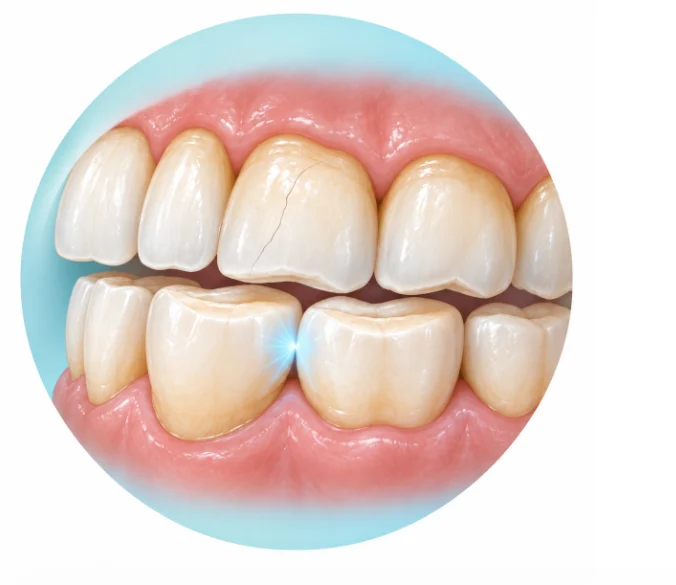
The surfaces of your teeth may become worn. Teeth, fillings or crowns may develop cracks or break. Your teeth may also become sensitive to hot or cold foods and drinks.
Discomfort when moving your jaw
You may feel pain when opening your mouth or chewing. Your jaw may be difficult to move, or it may feel as though it locks. These symptoms also need to be checked for other problems affecting the jaw joint and muscles.
Changes inside your mouth
You may notice tooth marks along the edges of your tongue or a white line inside your cheeks. The muscles at the sides of your jaw may also look more prominent.
Grinding sounds during sleep
Someone sleeping nearby may hear you grinding your teeth. However, clenching can be silent, so the absence of noise does not rule out bruxism.
These signs and symptoms do not prove that you have bruxism. For example, tooth wear may have happened in the past or have another cause. Your dentist will consider your symptoms, habits and examination findings together.
How Is Bruxism Assessed?
To assess bruxism, your dentist will ask about your experiences and examine your teeth, mouth and jaw. In some cases, devices may be used to measure jaw muscle activity.
Because sleep bruxism and awake bruxism happen in different circumstances, they may need different assessment methods.
Talking about your symptoms and daily habits
Your dentist may ask when you first noticed clenching or grinding, whether your jaw feels painful or tired, and how well you sleep. They may also ask about your daily routine, medicines and other health conditions.
If someone has heard you grinding your teeth while you sleep, their observations may help. However, what you or someone else reports is not enough on its own to confirm bruxism.
Examining your teeth, mouth and jaw
Your dentist will check for worn, cracked or broken teeth and examine fillings, crowns and other dental work. They will also look at your tongue and the inside of your cheeks, check your jaw muscles for tenderness or changes in size, and assess how your jaw moves.
These findings can have other causes. Worn teeth, for example, do not necessarily mean that you are currently clenching or grinding.
Measuring jaw muscle activity when needed
A test called electromyography, or EMG, records the electrical signals produced when your muscles work. It can be used to measure activity in the muscles you use for chewing.
Portable devices may allow recordings to be made at home or during everyday activities. Swallowing, coughing and other jaw movements can also appear in the recordings, so the results need careful interpretation.
Having a sleep study when needed
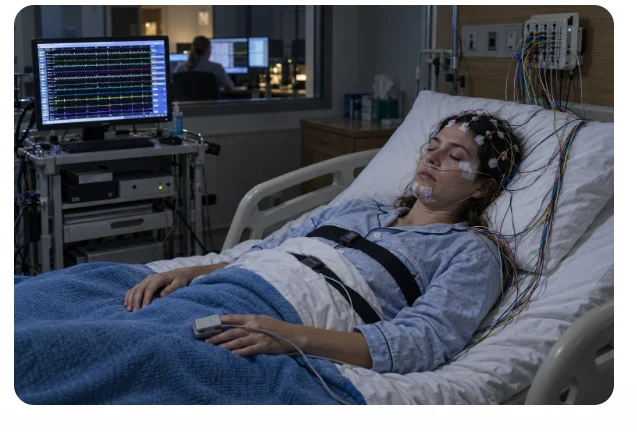
For a detailed assessment of sleep bruxism, a sleep study called polysomnography may be used. When combined with sound and video recordings, it is considered the reference method for assessing sleep bruxism.
The study records sleep stages and muscle activity. This helps distinguish clenching and grinding from other movements during sleep.
Not everyone needs a sleep study. Your healthcare professional will decide whether it is useful based on your symptoms and assessment.
The aim is to understand more than whether you clench or grind. Assessment also helps identify possible contributing factors, any effects on your teeth and jaw, and whether you need monitoring or treatment.
How Can Bruxism Be Managed?
How bruxism is managed depends on your symptoms and the findings of your examination. Not everyone needs treatment.
The main goals are to protect your teeth and nearby tissues and reduce pain or discomfort. An approach that helps one person may not work as well for another. Sometimes, several approaches are used together.
Noticing and changing daytime habits
If you clench while awake, learning to notice when you press your teeth together or tense your jaw can help. Reminders to relax your jaw muscles and changes to daily habits may help you manage these activities.
Addressing stress and sleep habits
Ways of managing stress, and psychological support when needed, may be part of your care. Establishing regular sleep habits and reviewing your smoking, alcohol and caffeine use may also help guide management.
Wearing a dental splint
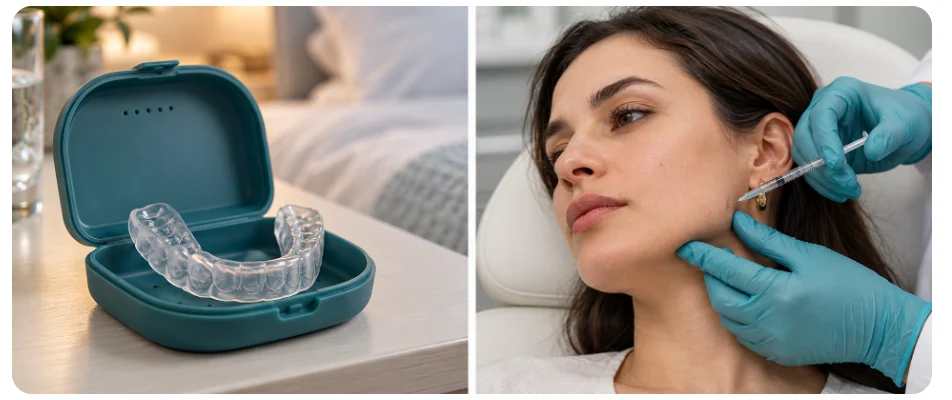
Your dentist may recommend a custom-made appliance that fits over your teeth. Often called an occlusal splint or night guard, it may help protect your teeth and manage some symptoms.
A splint does not necessarily stop clenching or grinding. Your dentist should choose the type of appliance, explain when and how long to wear it, and arrange follow-up checks.
Using biofeedback
Biofeedback devices detect muscle activity and respond with a sound, vibration or another signal. The aim is to make you aware that your jaw muscles are tightening or to interrupt that activity.
Whether this approach is suitable, and how much it may help, depends on the individual.
Considering medicines or botulinum toxin injections
In selected cases, a healthcare professional may consider medicines or botulinum toxin injections.
Botulinum toxin may reduce how strongly the jaw muscles contract, but it should not be seen as a treatment that completely stops bruxism. The possible benefits and unwanted effects need to be considered for each person.
No single treatment has been shown to permanently stop bruxism in everyone. Management therefore focuses on controlling its effects, protecting your teeth and reducing any problems it causes.
Check in with yourself
Review your symptoms with a short self-check and prepare a summary to take to your dentist. It does not diagnose; your answers are never sent anywhere.
References
- Lobbezoo F, Ahlberg J, Raphael KG, et al. International consensus on the assessment of bruxism: Report of a work in progress. Journal of Oral Rehabilitation. 2018;45(11):837–844. https://doi.org/10.1111/joor.12663
- Manfredini D, Colonna A, Bracci A, Lobbezoo F. Bruxism: a summary of current knowledge on aetiology, assessment and management. Oral Surgery. 2020;13(4):358–370. https://doi.org/10.1111/ors.12454
- Beddis H, Pemberton M, Davies S. Sleep bruxism: an overview for clinicians. British Dental Journal. 2018;225(6):497–501. https://doi.org/10.1038/sj.bdj.2018.757
- Manfredini D, Lobbezoo F. Role of psychosocial factors in the etiology of bruxism. Journal of Orofacial Pain. 2009;23(2):153–166.
- Lavigne GJ, Khoury S, Abe S, Yamaguchi T, Raphael K. Bruxism physiology and pathology: an overview for clinicians. Journal of Oral Rehabilitation. 2008;35(7):476–494. https://doi.org/10.1111/j.1365-2842.2008.01881.x
- Rintakoski K, Kaprio J. Legal psychoactive substances as risk factors for sleep-related bruxism: a nationwide Finnish Twin Cohort study. Alcohol and Alcoholism. 2013;48(4):487–494. https://doi.org/10.1093/alcalc/agt016
- Castroflorio T, Bargellini A, Rossini G, Cugliari G, Deregibus A. Sleep bruxism and related risk factors in adults: A systematic literature review. Archives of Oral Biology. 2017;83:25–32. https://doi.org/10.1016/j.archoralbio.2017.07.002
- Manfredini D, Ahlberg J, Aarab G, et al. Standardised Tool for the Assessment of Bruxism. Journal of Oral Rehabilitation. 2024;51(1):29–58. https://doi.org/10.1111/joor.13411
- Guaita M, Högl B. Current treatments of bruxism. Current Treatment Options in Neurology. 2016;18(2):10. https://doi.org/10.1007/s11940-016-0396-3
- Hardy RS, Bonsor SJ. The efficacy of occlusal splints in the treatment of bruxism: A systematic review. Journal of Dentistry. 2021;108:103621. https://doi.org/10.1016/j.jdent.2021.103621
- Jadidi F, Castrillon E, Svensson P. Effect of conditioning electrical stimuli on temporalis electromyographic activity during sleep. Journal of Oral Rehabilitation. 2008;35(3):171–183. https://doi.org/10.1111/j.1365-2842.2007.01781.x
- Shim YJ, Lee MK, Kato T, Park HU, Heo K, Kim ST. Effects of botulinum toxin on jaw motor events during sleep in sleep bruxism patients: a polysomnographic evaluation. Journal of Clinical Sleep Medicine. 2014;10(3):291–298. https://doi.org/10.5664/jcsm.3532
Last updated: 29 October 2026
The information on this site is for general information only and does not replace a dental examination or an individual assessment.
About the author
Specialist Dentist Dilara Boylu
Oral and Maxillofacial Surgeon
Email: dilara.parlak@ibu.edu.tr